Ro-Ro vs Container Shipping for Cars from China: Cost, Safety and Speed
By Fan, Sales Manager, Global Dealership Accounts, EVtoU · Published · Updated
Use Ro-Ro when you ship a larger batch to a major port with a regular Ro-Ro service. Use a container when you ship a few units, need extra protection, want to add spare parts, or your port has no Ro-Ro call. For landlocked Central Asia, rail is often the better third option. We ship all three from China, and many buyers mix them over a year.
Ro-Ro means roll-on/roll-off: cars are driven onto a vehicle carrier ship and parked on its decks. Container shipping means cars are loaded and lashed inside a steel box, usually a 40-foot high cube (40HQ), which then moves like any other container.
Which is cheaper to ship, Ro-Ro or container?
Ro-Ro is usually cheaper per car when you ship in volume on a main route. A container can work out cheaper for 2–3 units, or where there is no direct Ro-Ro service.
Ro-Ro lines charge by the size of each car, so a batch of ten SUVs costs roughly ten times one SUV. There is no box to pay for. A container has a fixed price per box, and a 40HQ typically takes 2–3 of our SUVs, depending on the model mix and load plan. For small orders, splitting that box cost across two or three cars can beat a Ro-Ro rate, especially where Ro-Ro sailings are rare. Freight rates move with the market, and Ro-Ro capacity out of China became tight as Chinese car exports grew. So we quote both methods for the actual sailing date instead of relying on last month's price.
How do Ro-Ro and container compare overall?
Each method wins on different points. This table shows the trade-offs we see most often.
| Factor | Ro-Ro | 40HQ container |
|---|---|---|
| Best for | Batches of cars to major ports | Small orders, mixed loads, secondary ports |
| Units per shipment | Any number, charged per car | Typically 2–3 SUVs per box |
| Cost per unit | Usually lower at volume | Can be lower for 2–3 units |
| Protection | Open deck handling, exposed to handling risk | Sealed and lashed inside a box |
| Spare parts in the load | Usually not allowed inside cars | Possible, if declared |
| Port reach | Ports with Ro-Ro calls only | Almost any container port, plus inland rail |
| Loading ports we use | Shanghai, Tianjin, Guangzhou | Main Chinese container ports |
| Unloading | Driven off, fast | Needs unstuffing at port or depot |
Which method is safer for new cars?
A container gives better protection. Cars sit sealed inside a box, so there is less exposure to weather, handling contact and theft of small parts.
Ro-Ro is still safe for most new-car shipments, and it is how most factories ship. Cars are driven by port staff, parked close together and lashed to the deck. Minor scratches or missing small items are the usual claims. To reduce them, we photograph each car before loading, record the VIN and odometer, and send you the file. Insure the shipment with all-risks cover, whatever the method. Our guide to FOB vs CIF explains why minimum CIF insurance may not cover this kind of damage. For containers, the ICC Incoterms 2020 rules also offer FCA and CIP, which place the risk handover at the terminal rather than on board.
How many SUVs fit in a 40HQ container?
Typically 2–3 of our SUVs per 40HQ. The exact count depends on the models in the load and the load plan.
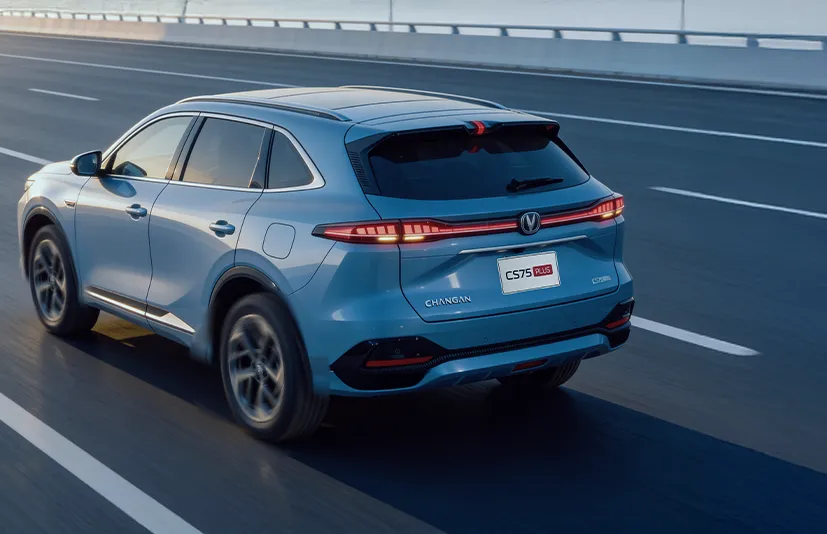
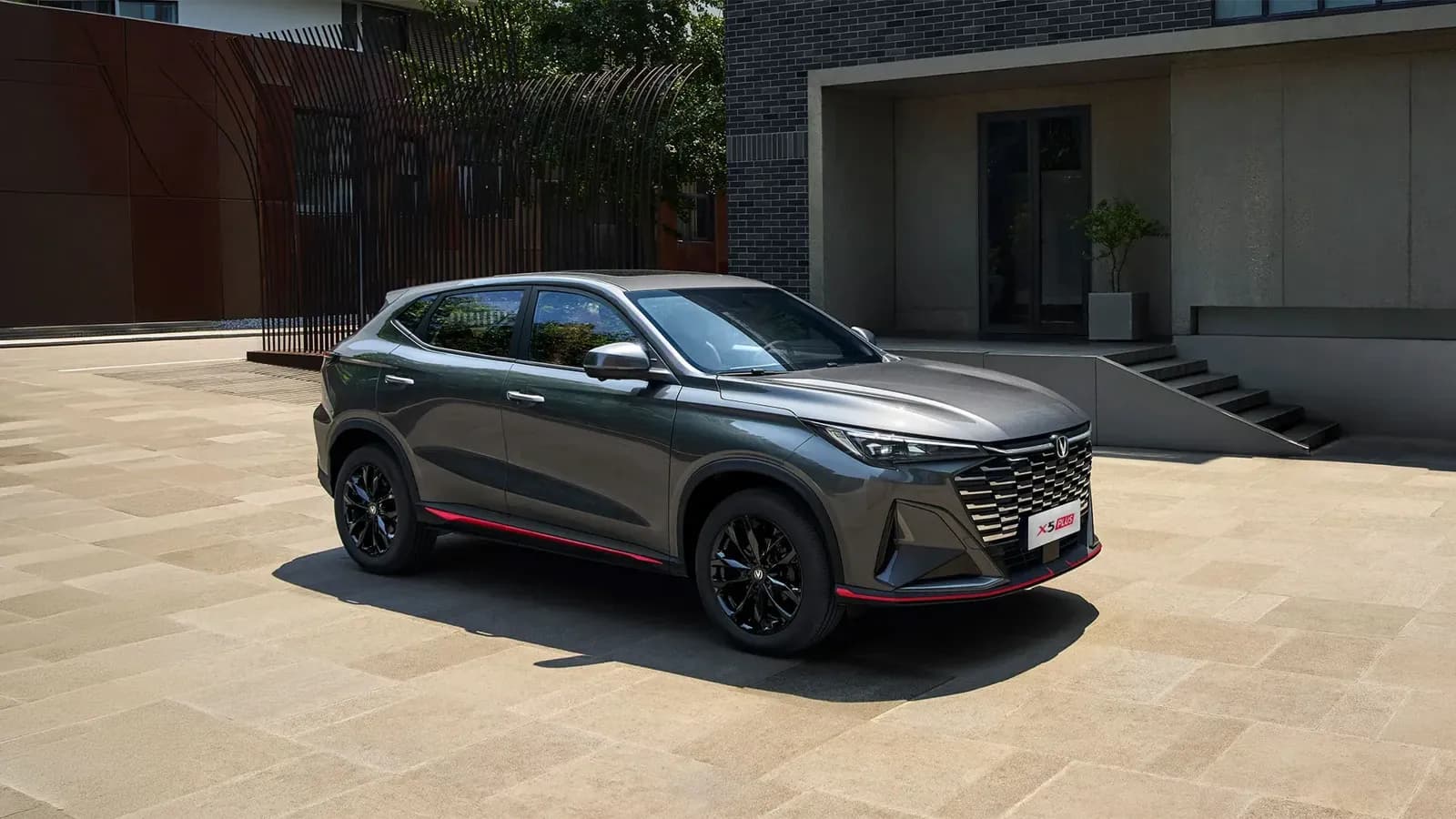
The CS55 PLUS is 4,550 mm long and the X5 PLUS is 4,540 mm long. The CS75 PLUS is 4,770 mm long and 1,910 mm wide. Mixing models in one box is common, for example a CS55 PLUS with an X5 PLUS. Dimensions come from Changan distributor pages for the CS55 PLUS and the CS75 PLUS. We send a load plan with each quote so your broker can check it. For vehicles that do not fit a standard box, flat-rack containers are an option.
Which is faster?
Transit is often similar on direct routes. The bigger time difference comes from how often each service sails and whether there are transshipments.
Container lines sail more often from more ports, which usually means less waiting in China. Ro-Ro sailings are less frequent on some routes, but the cars drive off quickly at arrival. As rough guides, port-to-port transit from China is about 3–5 weeks to the Gulf, about 5–8 weeks to West Africa and about 4–7 weeks to the west coast of Latin America. These are approximate ranges that change with the carrier, season and transshipment. Add the factory lead time, which is 20–45 days from deposit to port depending on the model.
What about rail to Central Asia?
For Kazakhstan, Uzbekistan and nearby markets, China–Central Asia rail freight is often the best option. It avoids a sea leg and a second land leg from a far-away port.
Cars move in containers or on special car wagons to border crossings such as Khorgos or Dostyk, where the track gauge changes. Road car carriers are another option for shorter hauls. Our guide on importing Changan cars to Kazakhstan and Uzbekistan covers routes and paperwork.
How must cars be prepared for each method?
Both methods need a clean, declared, drivable car. Ro-Ro has stricter rules on what can be inside.
- Fuel: keep only a small amount of fuel in the tank; carriers set limits.
- Battery: charged and connected for Ro-Ro, since port staff drive the cars on and off.
- Personal goods: Ro-Ro lines generally forbid loose items inside the car.
- Keys: handed over with the car and matched to the VIN list.
- Lashing: in a container, cars are chocked and strapped, and sometimes raised on racks. Ask your forwarder or us for the load method.
Which should I choose for my order?
A simple rule: under about five units to a secondary port, start with a container. A larger batch to a major port with Ro-Ro calls, start with Ro-Ro. Central Asia, look at rail first.
Then compare actual quotes for your sailing date. Our shipping and import guide lists documents by region, and our services page explains what we handle, from inspection to consolidation. Fleet buyers with staged deliveries can see how we split shipments on the fleet solutions page.
How do I get a shipping quote?
Send your models, quantity and destination port through the contact page, or message our WhatsApp sales team. We will quote Ro-Ro and container options side by side, with a load plan and the next sailing dates.