Changan CS55 PLUS vs CS75 PLUS: Which Should Dealers and Fleets Order?
By Kunta, B2B Solution Manager, EVtoU · Published · Updated
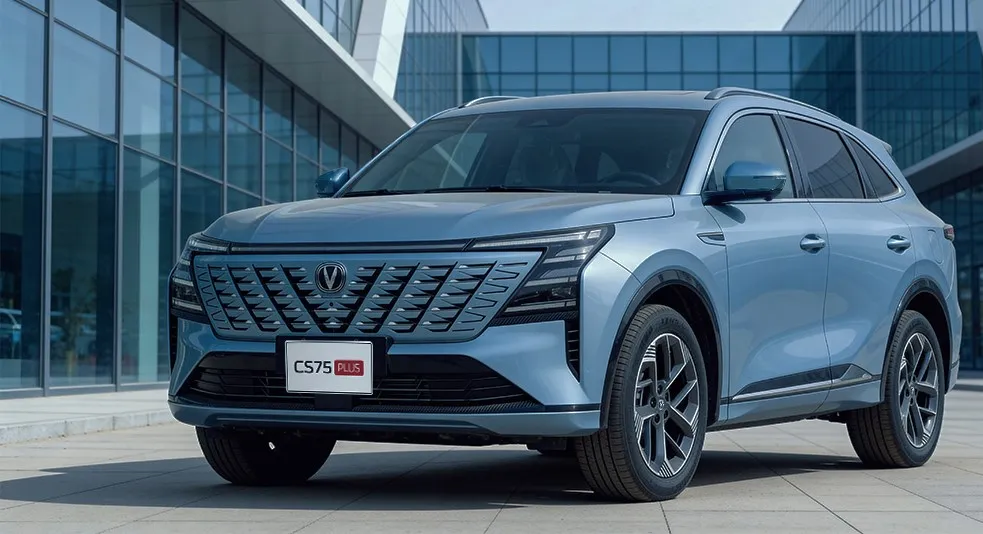
Order the CS55 PLUS if you need the lowest cost per unit with the most equipment, and the CS75 PLUS if your buyers need rear space, a bigger boot or a conventional automatic gearbox. Most dealers who open a Changan line end up stocking both, because they sell to different customers at different price points. This guide sets out the numbers we use when we help a dealer or fleet manager decide.
EVtoU is an independent exporter based in Beijing and Tianjin. We are not Changan itself. We buy from the factory supply chain and ship LHD vehicles to dealers and fleets in Central Asia, the Middle East, Africa and Latin America. Specs below come from Changan distributor pages for the CS55 PLUS and the CS75 PLUS.
Which is the better buy: CS55 PLUS or CS75 PLUS?
Neither is better overall. The CS55 PLUS wins on price and equipment per dollar. The CS75 PLUS wins on size, cargo space and gearbox type.
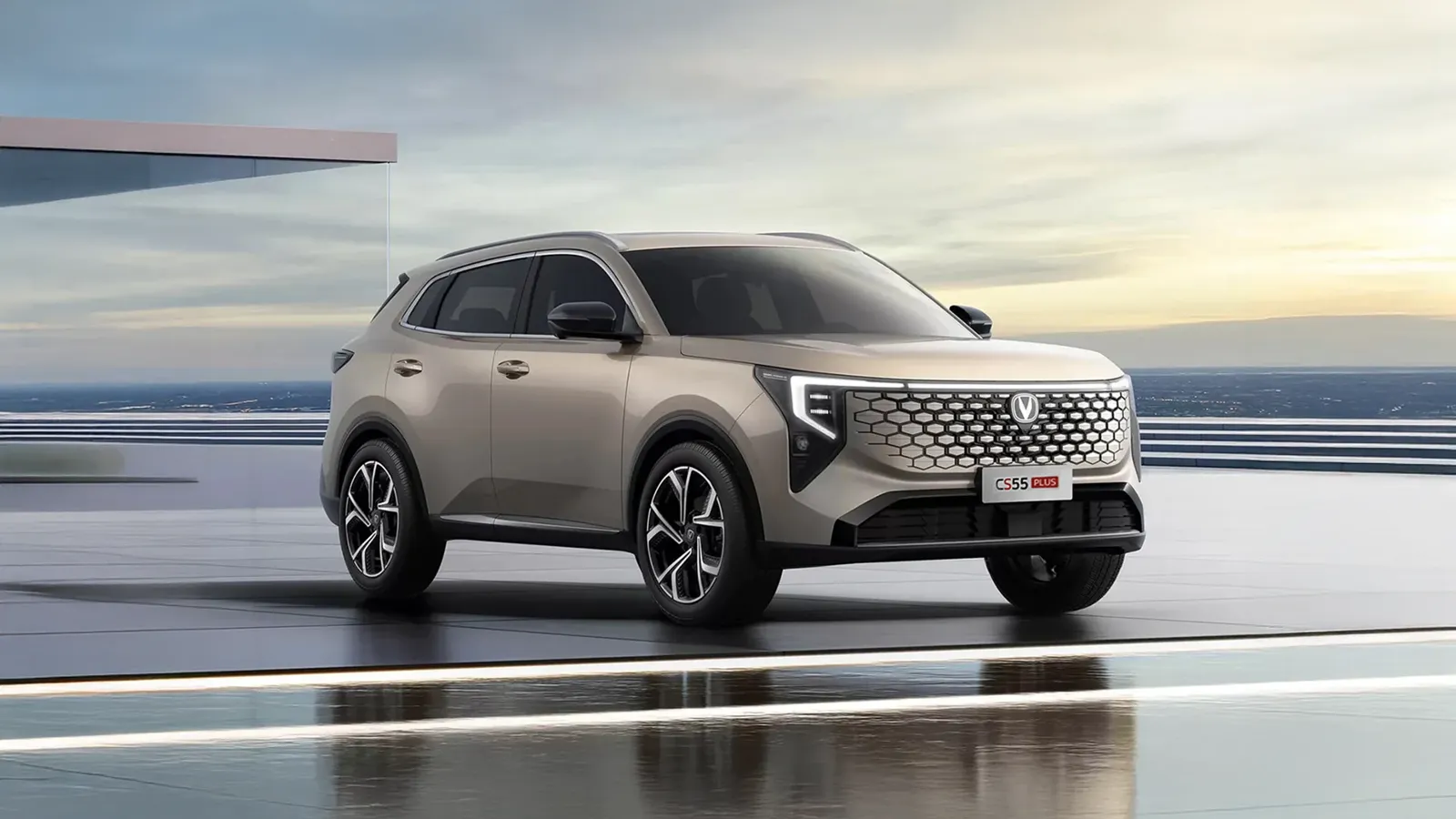
The CS55 PLUS is a compact SUV at 4,550 mm long. It has a more powerful version of the 1.5T Blue Whale engine (192 hp, 310 Nm) and a long list of driver aids, including a 540° camera, adaptive cruise and blind-spot monitoring. The CS75 PLUS is a midsize SUV at 4,770 mm long on a 2,800 mm wheelbase. It uses a 185 hp version of the 1.5T with an 8-speed automatic and offers a 610-liter boot. A family buyer who sits in the back of both usually picks the CS75 PLUS. A buyer who compares window stickers usually picks the CS55 PLUS.
How do the specs compare side by side?
The key gaps are length, wheelbase, boot size and gearbox. Engines are close in output.
| Spec | CS55 PLUS | CS75 PLUS |
|---|---|---|
| Class | Compact SUV | Midsize SUV |
| Engine | 1.5T Blue Whale petrol | 1.5T Blue Whale petrol |
| Power / torque | 141 kW (192 hp) / 310 Nm | 136 kW (185 hp) / 300 Nm |
| Gearbox | 7-speed wet dual-clutch (7DCT) | 8-speed automatic (8AT) |
| Length / wheelbase | 4,550 mm / 2,656 mm | 4,770 mm / 2,800 mm |
| Width / height | 1,868 mm / 1,675 mm | 1,910 mm / 1,695 mm |
| Boot | 475 L | 610 L |
| Fuel tank | 51 L | 58 L |
| Fuel use | 6.9 L/100 km combined | On request (market homologation sheet) |
| Ground clearance | 190 mm | 190 mm |
| Curb weight | 1,450 kg | 1,580 kg |
| Wheels | 19-inch | 18-inch or 19-inch by grade |
| Indicative FOB from | US$11,900 | US$14,900 |
| Lead time to port | 20–30 days (stock colors) | 25–35 days |
How big is the price gap at FOB?
The indicative gap is about US$3,000 per unit at FOB, from US$11,900 for the CS55 PLUS to US$14,900 for the CS75 PLUS. Final prices depend on grade, color, quantity and the factory batch, so treat these as starting points and check the live figures on our price page.
Freight does not close or widen the gap much. On Ro-Ro, each car is charged by its size, and the CS75 PLUS is only slightly larger. In a 40HQ container we typically load 2–3 units of either model, and the exact count depends on the load plan and model mix. Import duty is a different story: if your market charges duty as a share of the customs value, the higher FOB price of the CS75 PLUS carries through to a higher duty bill. Ask your customs broker for the current rate before you set retail prices.
Does the gearbox matter: DCT or 8-speed automatic?
Yes, for fleets it often decides the order. Many taxi, government and rental buyers in hot climates ask for a torque-converter automatic, and the CS75 PLUS has one.
The CS55 PLUS uses a wet dual-clutch gearbox. Wet clutches run in oil, which helps with heat compared with dry-clutch designs, and a DCT gives quick shifts and good fuel use. For private buyers it works well. The CS75 PLUS uses a conventional 8-speed automatic with shift-by-wire. In long stop-and-go shifts, such as airport taxi queues or city deliveries, fleet engineers tend to prefer this type. Workshops across the Middle East and Africa also know how to service it. If your fleet policy names a gearbox type, match it to the model rather than argue with the policy.
Which model suits a fleet?
The CS75 PLUS suits most fleets that carry passengers in the back. The CS55 PLUS suits corporate car schemes and fleets where cost per unit comes first.
Corporate cars and premium ride-hailing
The CS55 PLUS works well here. Drivers get ventilated front seats, a 14.6-inch screen and adaptive cruise. The 475-liter boot takes airport luggage, and the rear seats have air vents. Combined fuel use of about 6.9 L/100 km helps keep running costs down.
Government, NGO and executive taxi
The CS75 PLUS is the usual choice. The 2,800 mm wheelbase gives midsize rear legroom, the 610-liter boot takes equipment cases, and the 8-speed automatic fits common tender rules. The base grade keeps the unit price down; the top grade adds integrated adaptive cruise, AEB and lane keeping.
Car rental
Rental firms often buy both: the CS55 PLUS for the compact SUV class and the CS75 PLUS for the family class. Our fleet solutions team can split one order across both models and stagger deliveries to match your season.
Which model should a dealer stock first?
Start with the CS55 PLUS as the volume model and add the CS75 PLUS as the step-up. That gives your showroom two price points and a clear upsell path.
The CS55 PLUS is the model most of our dealer partners order first. It lets a dealer advertise a feature list close to Japanese and Korean compact SUVs at a lower sticker. The CS75 PLUS then earns margin from buyers who want more space. If your market rewards power and screens, consider the 2026 CS75 PLUS with the 2.0T engine as a third, flagship level. Our page on exporting the CS55 PLUS and CS75 PLUS covers mixed orders in more detail.
How long does each model take to reach the port?
Plan on 20–30 days from deposit to port for CS55 PLUS stock colors and 25–35 days for the CS75 PLUS. Sea or rail transit comes on top of that.
Lead time depends on factory batch timing and color mix. Rare colors can take longer. If you order both models in one shipment, the slower model sets the date. See our shipping and import guide for approximate transit ranges by route.
What should you confirm before paying a deposit?
Confirm the exact grade, the destination-market specification and the documents your customs office needs. Everything else follows from those three.
- Grade and equipment list — especially for the CS75 PLUS, where base and top grades differ in wheels, roof, airbags and driver aids.
- Homologation data — fuel use and top speed for the CS75 PLUS come from the market homologation sheet, so ask for the sheet that matches your country.
- Color mix and VIN range — listed on the proforma invoice so your bank and customs broker can match documents.
- Shipping method — Ro-Ro, 40HQ container or rail, and the port of loading.
- Warranty terms — warranty follows the destination-market policy, with parts support from China.
Browse both models on the vehicles page, or compare them within their classes on the compact SUV and midsize SUV pages.
How do I get a quote for a mixed order?
Send us your market, model mix, grades and quantity through the contact page, or message our WhatsApp sales team from any page on this site. We reply with an FOB or CIF quote, a proposed load plan and the current lead time for each model.